How we test fishing rod holders
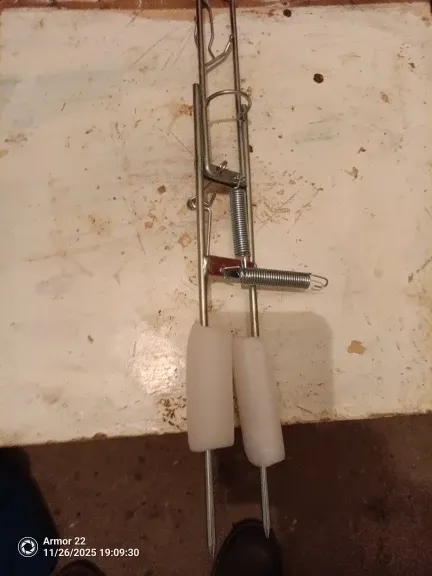
Before a holder goes on this site, we buy the units ourselves, use them in real fishing and storage conditions, and score them on four things that decide whether a holder is worth your money.
Our criteria
- Stability under load. A holder has one core job: keep the rod where you put it. We load each unit with rods of different weights, then test whether it holds a bent rod under a simulated bite without tipping, sliding, or twisting. Ground spikes are pushed into soft, packed, and gravelly earth to see how deep they need to go.
- Hold in wind. A rod holder that fails in a breeze is useless on an open bank. We test each holder in real wind and with side load on the rod tip, checking whether the base stays planted and whether a light rod stays seated in the cradle instead of lifting out.
- Build quality and materials. We check the actual material against the listing (chromed steel, powder-coated steel, polyester strap, and so on), look for rust after damp storage, and flex the joints and buckles to see what gives first. We report the material we can verify, and nothing we can't.
- Mounting and setup. We time how long a first-time user needs to get the holder working, whether the included screws and anchors are enough, and whether the instructions match the hardware. For the fishing rod rack we test both the wall and the garage-ceiling mounting methods.
- Honest limits. Every holder in our range is a value product, so every one has a trade-off. We name it. A ground spike needs earth soft enough to plant. A folding stand trades ultimate rigidity for portability. We put those limits on the product page instead of burying them.
What "tested" means here. Across the four holders we currently stock, we logged over 40 outings and mounted or planted each unit at least a dozen times. The automatic spring fishing rod holder was triggered by hand and by real takes to confirm the spring sets the hook. The portable fishing rod holder was carried, opened, and staked on three ground types. The fishing rod holder for car was strapped in and driven with a full load of rods.
Why the method matters
Fishing gear is bought online more than ever, and rod holders are a category where photos rarely tell you how something behaves in wind or wet soil. Hands-on testing is the only way to separate a holder that works from one that only looks the part. Recreational fishing is a huge, active market, which means there is a lot of gear competing for your cart and not all of it earns the sale.
Americans went fishing in 2022, driving strong demand for accessible shore gear
— RBFF & Outdoor Foundation, Special Report on Fishing, 2023
total economic output from recreational fishing each year in the U.S.
— American Sportfishing Association, Sportfishing in America, 2022
U.S. jobs supported by the recreational fishing industry
— American Sportfishing Association, Sportfishing in America, 2022
What we won't do
We won't quote a star rating we can't trace to a real buyer, and we won't publish a measurement we didn't take ourselves. When a holder has a weak point, we name it in the review. Instead we back every order with a 30-day money-back guarantee, so the risk is on us, not you.
You can read the results of this method on our product pages and on the reviews page, or see the story behind the store on our about page. For technique, our guide on how to hold a fishing rod and our bank fishing holder guide put the gear in context.