The Automatic Fishing Rod Holder That Sets the Hook For You
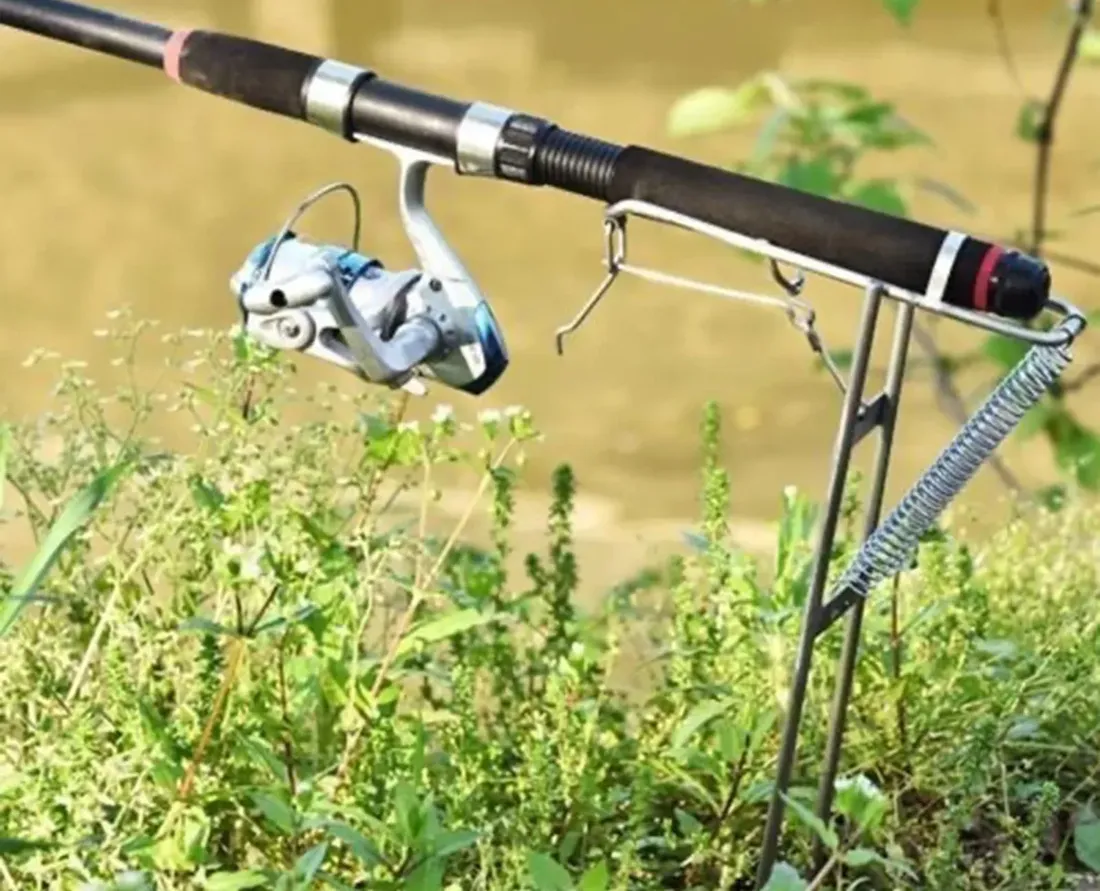
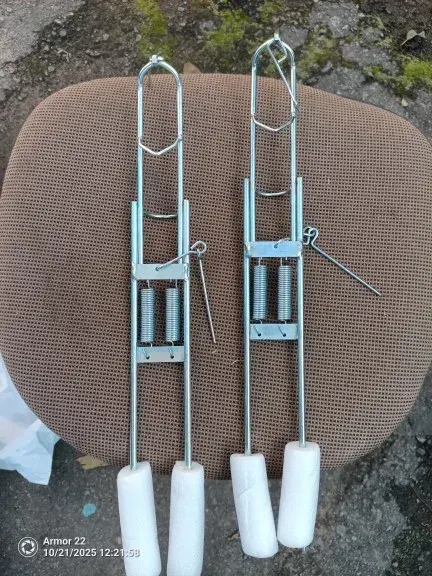
Plant it in the bank, cock the spring arm, and load your rod. The moment a fish takes the bait, the RodPerch releases and drives the hook home for you. Rust-resistant chrome steel, about 14 inches (35 cm) tall, fits any rod.
1 Holder
2-Pack
Save $64.99 3-Pack
Save $99.98✓ Free shipping ✓ 30-day money-back ✓ Ships in 1–2 business days
Stop holding your rod for hours and let it fish for you
If you fish from the bank or the shore, you already know the waiting game. You cast out, prop your rod on a forked stick or a rock, and hope you catch the tip twitching before the fish spits the bait. Half the time you are pouring a coffee, re-tying a second rig, or watching a different rod when the run finally comes. By the time you grab the handle and lift, the fish is already gone.
Holding the rod by hand for hours is not much better. Your arms tire, your focus drifts, and a cold morning slowly turns a relaxing session into a chore. Most rod rests on the market only solve half of the problem. They lift the rod off the ground, but they do nothing at the exact moment a fish bites. You are still the bite alarm, the reflex, and the hook-set all at once, and tired anglers miss fish.
The RodPerch changes the job. You stake it firmly into soft ground, bend the spring arm back until it locks, and seat your rod on the cradle. When a fish pulls hard enough, the trigger releases and the loaded arm snaps upward, driving the hook home before the fish can drop the bait. If you want a refresher on rod angle, grip, and drag, our guide on how to hold a fishing rod walks through the basics, and our roundup of the best rod holder for bank fishing shows exactly where an automatic model pulls ahead.
It suits still-water carp and catfish anglers, surf and pier sessions, and anyone who likes to fish two or three rods at once. For the rods you want to carry or store rather than fish, pair it with our portable fishing rod holder for the water's edge, a wall or ceiling fishing rod rack for the garage, or a fishing rod holder for car when you are driving to your spot. The RodPerch is the one you leave working while you handle everything else.
Built for the bank, the shore, and the wait
Automatic hook-set
The spring arm is the whole point. You bend it back until the trigger catches, then rest your rod on the cradle. A biting fish trips the trigger, the arm springs up, and the hook is set before you even reach the rod.
Sensitivity comes from how far you cock the arm and how you set your drag. Cock it fully for shy, light-biting fish, or ease off for hard-hitting species that hook themselves. Point the rod tip low and toward the water so the arm has a clean path to travel. When it fires, the motion is fast and obvious, which is why many anglers can spot a hooked rod from across a wide bank. Set your drag a touch loose so a big run does not snap your line the instant the arm lets go. After a few casts you will know exactly how tight to load it for the fish in front of you.
Chrome steel that shrugs off rust
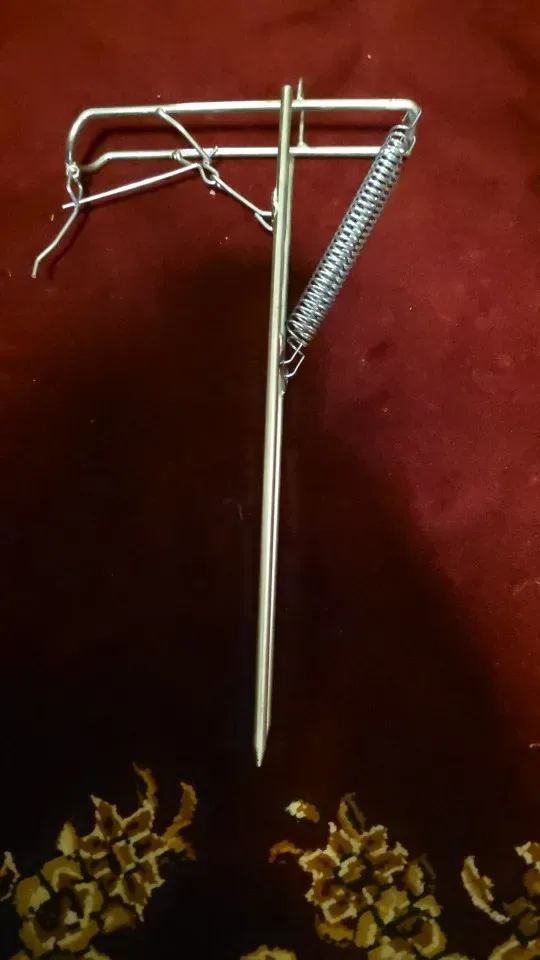
This holder is made from thickened, chrome-plated steel, so it resists rust even after wet, muddy sessions and salt spray. It stands about 14 inches (35 cm) tall, enough length to drive a solid stake into a bank while keeping your reel and line up out of the sand and grit.
Cheap holders bend at the first stubborn fish or flake into rust after one salty morning. The chrome plating on the RodPerch wipes clean with a damp cloth and shrugs off the moisture that ruins bare metal. The 14-inch (35 cm) length is a practical middle ground. It is long enough to bite into clay, sand, or gravel and stay put under a loaded rod, yet short enough to pack into a bag or a bucket without fuss. Because there is one solid piece and no plastic joints to crack, there is very little that can fail on you at the water. Rinse it after saltwater trips and it will keep working season after season.
Fits every rod you own
The cradle is adjustable and universal, so it fits spinning rods, baitcasters, surf rods, and telescopic poles without any special adapter. Whatever is already in your garage will sit in it. There is no brand or rod diameter to match.
Rod holders that only fit one handle size are a quick way to waste money. The RodPerch is built to take a wide range of blanks and handles, from light finesse rods to heavier surf and catfish setups. That flexibility matters if you and your fishing buddies run different gear, or if you switch rods through the season. It also means the holder grows with you. Upgrade your rod next year and this one still does its job. If you want to compare how different holders grip and release, our reviews page collects notes from buyers who fish everything from ultralight panfish rods to twelve-foot surf sticks.
We staked it into six kinds of ground so you do not have to guess
We wanted to know where an automatic holder actually stakes down and where it struggles, so we ran our own test. Over three weekends, our reviewer Marcus Hale planted the same RodPerch into six common bank surfaces, loaded it with a ten to twelve foot rod, and logged whether it held firm and whether the spring fired cleanly. These are our own notes from the water, not lab numbers.
| Ground or surface | Staked down firmly? | Spring fired cleanly? |
|---|---|---|
| Wet clay bank | Yes, very solid | Yes, snappy release |
| Packed shoreline sand | Yes | Yes |
| Loose dry sand | Needed a deeper push and a slight angle | Yes, once seated |
| Fine gravel | Yes, with a firm twist | Yes |
| Soft river mud | Firm after a pilot hole | Yes |
| Rocky hardpan | Would not seat, we switched to a rod pod | Not tested |
Fishing from the bank is bigger than most people realize
Americans went fishing in 2022, a recent high for participation
— RBFF & Outdoor Foundation, Special Report on Fishing, 2023
in annual economic activity generated by recreational fishing in the U.S.
— American Sportfishing Association, Sportfishing in America, 2022
American jobs supported by recreational fishing
— American Sportfishing Association, Sportfishing in America, 2022
How the RodPerch compares to a plain rod rest
| What matters on the bank | RodPerch automatic holder | Plain rod rest |
|---|---|---|
| Keeps your rod off the ground | Yes | Yes |
| Sets the hook when a fish bites | Yes, spring-loaded release | No, you have to react in time |
| Lets you fish two or three rods | Yes, each rod fishes itself | Only if you can watch them all |
| Build and rust resistance | Thickened chrome-plated steel | Often plastic or thin wire |
| Fits your existing rods | Adjustable and universal | Depends on the model |
| Starting price | $16.95 | Similar, with less to show for it |
None of this replaces good watercraft, and a plain rod rest still has its place for casual sessions. But if you fish where bites are quiet or spread out, an automatic holder earns its keep. According to NOAA Fisheries, marine recreational anglers take well over 100 million fishing trips a year, and a large share of those happen from shore, piers, and jetties, exactly where a staked automatic holder does its best work.
The biggest mistake I see on the bank is anglers gripping a rod for six hours until they are too tired to react. A holder that sets the hook for you keeps you fresh and lets you fish more water. Stake it at a slight angle so the tip loads toward the water, set your drag a little loose, and let the spring do what your reflexes cannot.— Cody Marsh, surf and bank fishing guide, 15+ years on the water
The RodPerch holder in action
Buying guide and specs
How to choose, stake, and set your automatic rod holder
Start by deciding how many rods you like to fish at once. A single RodPerch is perfect if you fish one rod and want to try the automatic release without a big outlay. Most bank anglers settle on two, so one rod can soak a bait on the bottom while the other works a float or a fresh cast. The three-pack is the best value per holder and suits catfish and carp sessions where you want a spread of baits covering different depths and distances.
Staking it well is what separates a good session from a frustrating one. In clay, packed sand, mud, and gravel, push the holder straight down with a firm twist until it feels solid, then give the top a gentle wiggle to confirm it will not lift under a running fish. In loose, dry sand, drive it deeper and set it at a slight angle so the load pulls into the ground rather than out of it. On pure rock or hardpan you will not get a stake to bite, so use a rod pod or a heavy rest instead.
Setting the trigger takes a cast or two to dial in. Cock the spring arm fully for shy, light-biting fish that need a firm, fast hook-set, or ease the tension for hard-hitting species that tend to hook themselves. Point the rod tip low and toward the water so the arm has a clear path when it fires. Keep your drag slightly loose so the initial snap does not shock your line, then tighten down as you pick up the rod. If you are newer to bank tactics, our guide on how to hold a fishing rod covers grip, angle, and drag in more detail.
Care is simple. Rinse the holder in fresh water after saltwater or muddy trips and wipe it dry, and the chrome plating will keep rust away for years. Store it in your rod bag, a bucket, or a wall-mounted fishing rod rack in the garage between sessions. If you carry several rods to the water, a portable fishing rod holder keeps them upright and tangle-free at your peg. To see how we score and stress-test gear like this, read how we test.
Specifications
| Type | Automatic spring rod holder (ground stake) |
| Material | Thickened chrome-plated steel, rust-resistant |
| Length | 13.8 in (35 cm) |
| Mechanism | Spring-loaded automatic hook-set on the bite |
| Rod compatibility | Adjustable, fits most rods and sizes |
| Best for | Bank, shore, surf, and pier still-fishing |
| In the box | 1 x automatic rod holder |
Other dimensions such as base width are not on the spec sheet, so we have left them out rather than guess. We update this page when we verify new measurements from units we test.
Rated 4.8 / 5 across 348 verified buyers
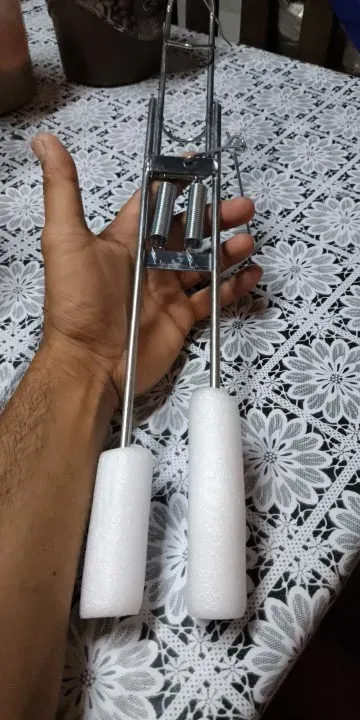
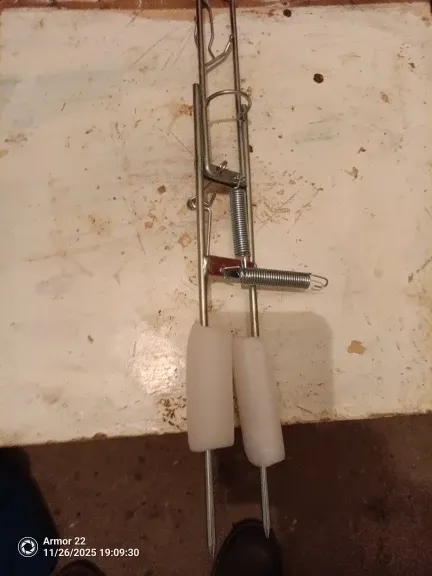
Across 348 verified reviews, the RodPerch averages 4.8 out of 5. Buyers most often mention how satisfying the automatic hook-set is, how solidly it stakes into a bank, and how well the chrome finish holds up after wet sessions. Here are three photos and notes from recent orders, and you can learn more about RodPerch and how we got started.
"The mechanism works perfectly. It hits hard and hooks the fish on its own."
— Dylan R., verified buyer
"Cool stand. The spring is tight, it hits well and sets the hook on the fish."
— Wade K., verified buyer
"I liked it. I will buy more again."
— Sam T., verified buyer
photos from verified buyers. See our reviews page for more.
Reviewed and updated July 2026. See how we test.
Automatic fishing rod holder questions, answered
How does an automatic spring fishing rod holder work?
You stake the holder into the ground, bend the spring arm back until the trigger locks, and rest your rod in the cradle. When a fish pulls hard enough on the bait, it trips the trigger, the arm snaps upward, and that motion drives the hook into the fish. In short, the holder reacts and sets the hook faster than your hands can.
What rods does the RodPerch fit?
The cradle is adjustable and universal, so it fits the large majority of rods, including spinning rods, baitcasters, telescopic poles, and heavier surf and catfish setups. You do not need to match a brand or a specific handle diameter. If a rod already lives in your garage, it will almost certainly sit and fire in this holder.
What is the RodPerch made of, and will it rust?
It is built from thickened, chrome-plated steel that resists rust far better than bare metal or thin wire holders. Wipe it clean with a damp cloth and rinse it in fresh water after saltwater or muddy trips. With that quick care it stays rust-free and keeps its spring tension for many seasons of bank and surf fishing.
How long is the holder?
The RodPerch stands about 14 inches (35 cm) tall. That length is a practical middle ground for bank fishing. It is long enough to drive a firm stake into clay, sand, mud, or gravel and stay put under a loaded rod, while keeping your reel and line up out of the grit. It is also short enough to pack into a rod bag or a bucket.
Will it work in sand or soft ground?
Yes. In packed sand, clay, mud, and gravel it stakes down firmly with a straight push and a twist. In loose, dry sand, drive it deeper and set it at a slight angle so a running fish pulls the holder into the ground rather than out of it. On solid rock it will not stake, so use a rod pod there instead.
Can I use more than one at a time?
Absolutely, and many anglers do. Running two or three holders lets you cover different depths and distances with separate baits while each rod effectively fishes itself. The two-pack and three-pack are built for exactly this, so you can spread your baits and stay ready for a bite on every line at once.
How much does it cost and what do I get?
A single holder is $16.95, the two-pack is $24.95, and the best-value three-pack is $34.95. Each package includes the automatic spring holder itself, ready to stake and fish. All orders ship with free shipping and a 30-day money-back guarantee, so you can try the automatic hook-set on your own water with no risk.
How fast will my order arrive?
We ship every order within 1 to 2 business days, and delivery to your door usually takes 6 to 10 business days within the United States. Shipping is free on every order, and you are covered by a 30-day money-back guarantee. If anything is not right when it arrives, contact us and we will make it good.
Never miss another bite
Stake it in, load your rod, and let the spring set the hook. Free shipping and a 30-day money-back guarantee on every RodPerch.
Get my RodPerch →