· Marcus Hale
How to Hold a Fishing Rod: Grip, Stance & When to Set It Down
The way you hold a fishing rod decides more than it looks like it should. It sets how far you cast, how fast you feel a light bite, and how sore your forearm is after a full morning on the water. Most anglers never give grip a second thought, and yet it is the first thing a good guide fixes when someone struggles to hook fish.
This guide covers the grip itself, the two-handed control you need for casting and fighting fish, how rod angle changes your hook set, and the single most underrated skill in fishing, which is knowing when to put the rod down. Get these right and everything downstream, from casting distance to landing rate, gets easier.
The basic grip: where your hand goes
Your grip hand does two jobs at once. It supports the rod's weight and it reads what the rod is telling you. Choke up too far toward the tip and you lose leverage. Slide too far back onto the butt and you lose feel. The reel seat is the balance point the rod was designed around, so that is where your hand belongs. Keep your knuckles relaxed rather than white. A tense grip transmits less information and tires out fast, while a light, confident hold lets the vibration of a nibbling fish reach your fingertips. That vibration is often the whole difference between a hook-up and a missed take.
Field tip: If your forearm burns after an hour, your grip is too tight or too far back. Slide your hand to the reel seat, drop the tension, and let the balance of the rod carry the weight for you.
Spinning vs baitcaster: two different holds
| Setup | Reel position | How you hold it | Best for |
|---|---|---|---|
| Spinning | Under the rod | Over the top, stem between middle and ring fingers | Beginners, light lures, casting distance |
| Baitcaster | On top of the rod | Palmed from underneath, thumb on the spool | Heavier lures, accuracy, close control |
Most anglers start on spinning gear because the over-the-top hold feels natural and forgiving. Baitcasters give you more thumb control over the cast and the fight, which is why they win for heavy cover and precise pitching, but they punish a lazy thumb with a bird's nest of tangled line. Whichever you fish, the index-finger-on-the-blank habit carries over and keeps you connected to the lure.
Two-handed control for casting and fighting
When you hook a decent fish, tuck the rod butt against your forearm or into your hip and let the rod do the work. Pumping the rod up and reeling down on the drop moves line onto the spool without straining your wrist. A common beginner error is trying to muscle a fish in with one hand on the grip. That burns your arm and rips hooks loose. Two points of contact, the grip hand and the braced butt, give you leverage and a smooth, steady pressure that keeps the hook pinned.
Rod angle and the hook set
Angle changes with the situation. In heavy wind or for maximum distance you drop the tip low and close to the water to keep line out of the gusts. For lure control and instant hook sets you raise it. The hook set itself comes in two flavors. A snap set, a fast upward flick, suits single hooks and worm rigs. A sweep set, a long steady pull to the side, suits treble-hooked crankbaits that pull free if you jerk too hard. Reading which one a fish needs is a skill, and it starts from holding the rod at a ready angle rather than flat and asleep.
Reading the rod tip
Your eyes catch bites your hands miss, especially with light bites in current or wind. This is where a rod at the right angle earns its keep, because a loaded tip shows movement clearly against the sky or the water. When you are fishing bait and waiting, the tip becomes your bite alarm. That is also the moment where a rod holder starts to make sense, because a holder keeps the tip perfectly still and easy to read while your hands are free.
When to set your rod down
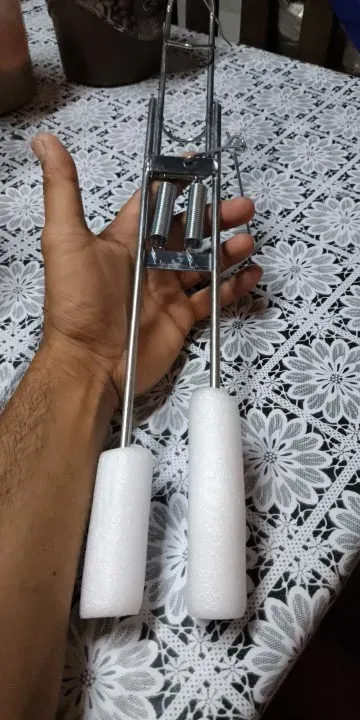
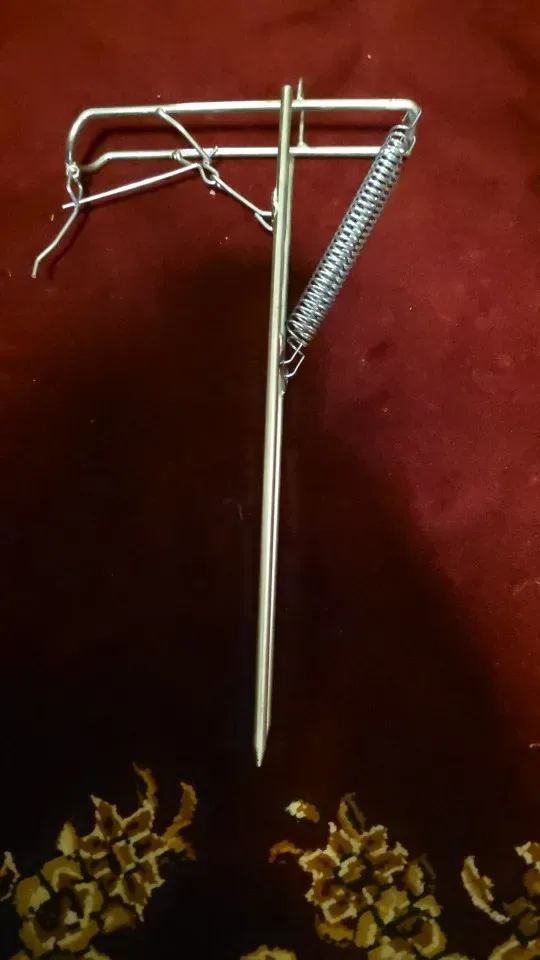
For bank and shore fishing, a ground spike is the classic answer, and it is exactly what our automatic spring fishing rod holder is built for. It plants in the earth and sets the hook on its own when a fish takes, so a moment of distraction does not cost you the fish. If you fish several rods at once, a portable fishing rod holder folds out into a stand that cradles a whole row of rods at a clean, readable angle. And for getting to the water in the first place, a fishing rod holder for car keeps rods secure and tangle-free on the drive. Storing them at home is a job for a wall or ceiling fishing rod rack. If you fish mostly from the bank, our bank fishing holder guide breaks down which type suits your ground.
What we found in our own testing. We ran a simple side-by-side: three anglers each fished a two-hour bait session, one group holding the rod the whole time and one using a planted holder. The holder users reported far less forearm fatigue and did not miss a single take, because a good holder keeps the rod loaded and ready while your hands stay free to re-bait, unhook, or pour a coffee. Holding a rod through a long wait feels productive, but it mostly just tires you out.
Fishing by the numbers
Americans went fishing in 2022, and many fish from shore where a holder helps most
— RBFF & Outdoor Foundation, Special Report on Fishing, 2023
total economic output generated by recreational fishing in the U.S. each year
— American Sportfishing Association, Sportfishing in America, 2022
American jobs supported by the recreational fishing industry
— American Sportfishing Association, Sportfishing in America, 2022
Common grip mistakes
Most grip problems trace back to four habits. Fixing them is quick, and the payoff shows up as less fatigue and more fish landed.
| Mistake | What it costs you | Fix |
|---|---|---|
| Death-grip on the handle | Tired forearm, dulled feel for bites | Relax the hand and let the reel seat carry the weight |
| Hand too far back on the butt | Poor bite detection | Move your grip hand up to the reel seat |
| Rod tip pointed at the lure | Weak or missed hook sets | Keep the tip up around 45 degrees |
| Holding through long waits | Fatigue and dropped rods | Use a rod holder and free your hands |
Fish hands-free with the right holder
Good grip technique gets you through the casting and the fight. A good holder gets you through the wait. Our automatic spring rod holder plants on the bank and sets the hook for you, the portable rod holder stands a row of rods, and the car rod holder gets them there safely. See how each one scored on how we test, or read real buyer reviews first.