· Marcus Hale
DIY Fishing Rod Holder: PVC, Wood & When to Just Buy One
You do not need to spend a dollar to keep a rod off the ground. A scrap of PVC pipe, a few screws, and twenty minutes will get most anglers a working holder. That is the honest truth, and it is worth saying plainly on a site that also sells rod holders.
This guide shows the three homemade builds that actually hold up, the exact materials for each, and the points where a DIY holder quietly costs you fish or gear. The last section compares the real trade-offs between building and buying, so you can decide what makes sense for the way you fish.
Build 1: The PVC bank spike
| Material | Spec | Approx cost |
|---|---|---|
| PVC pipe | 1.5 in diameter, 2 ft length | $3 to $5 |
| Hacksaw or PVC cutter | to cut the angled point | tool you likely own |
| End cap (optional) | keeps dirt out in transport | about $1 |
Match the pipe diameter to your rod butts. A 1.5-inch pipe swallows most spinning and casting rods with room to spare. Cut the point at a steep angle so it slices into the soil instead of compacting it, and leave the pipe long enough that a third of it sits below ground for stability. On soft clay or damp bank this holds a rod through a strong bite. It will not set the hook and it works poorly in dry or sandy soil, which we will come back to.
Field tip: Drill a small drain hole an inch from the bottom of the pipe so rain and river water do not pool inside and float your rod butt out.
Build 2: The wooden garage rack
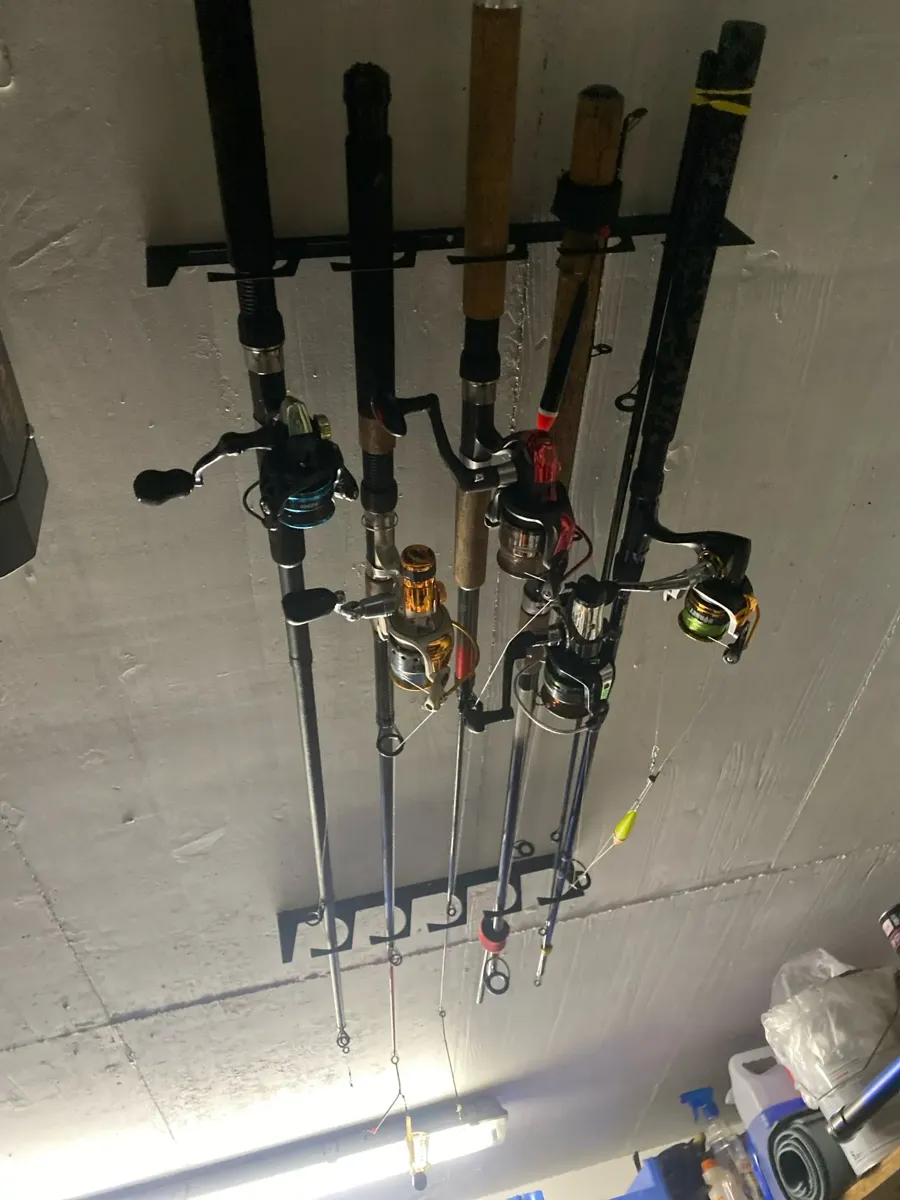
Space the slots about three inches apart so reels do not knock together, and sand the slots smooth so nothing scuffs your gear. Mount the lower board (the one that holds the butts) at waist height and the upper board (with hooks for the tips) about four feet above it. Always screw into studs, not just drywall, because a full rack of rods and reels is heavier than it looks. If you would rather not cut and drill, a ready-made wall or ceiling fishing rod rack does the same job with matched hardware, a finished look, and the option to mount on a garage ceiling to save floor space.
Build 3: The bucket rod caddy
This is the most beginner-friendly build because it needs no cutting tools beyond a knife. The bucket carries your tackle, gives you somewhere to sit, and holds two or three rods upright at the water's edge. It is not stable with a full load of rods and it will tip in wind, so treat it as a casual, single-angler solution rather than a serious multi-rod stand.
What DIY does well
Building your own also lets you size everything to your exact gear and space. You can make a wall rack that fits an awkward corner, or a spike sized to your favorite rod butt. There is real satisfaction in it, and when a homemade holder breaks you fix it with parts from the same trip to the hardware store. For a lot of anglers, that is genuinely all they need.
Where DIY falls short
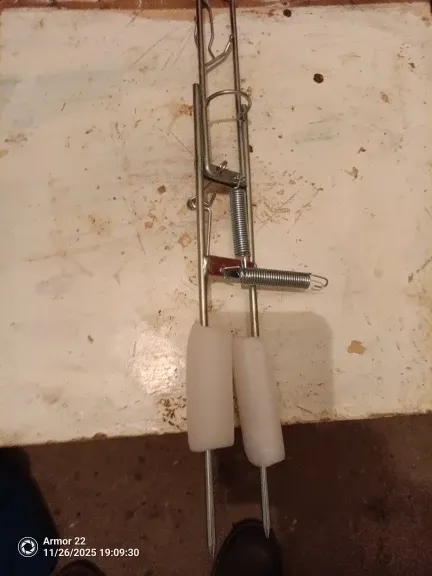
The first gap is the hook set. A PVC spike holds a rod but does nothing when a fish bites, so a take you do not see is a fish you do not catch. Our automatic spring fishing rod holder plants like a spike but releases a spring the instant a fish takes, setting the hook while your hands are busy. That matters most for bait and bottom fishing, and our bank fishing holder guide goes deeper on it.
The second gap is portability. A wooden rack is fixed to a wall and a bucket is clumsy with several rods. A portable fishing rod holder folds flat, carries easily, and stands on adjustable, spiked legs to cradle up to eight rods at once. The third gap is the drive. Loose PVC and buckets slide around a trunk and tangle your line, while a fishing rod holder for car straps to the seat and keeps everything secure and separated on the way to the water.
What we found building all three. We built each DIY holder and fished them against our stocked units over a month. The PVC spike held a rod fine on soft clay but pulled loose in dry, sandy ground, and of course it never set a hook. The 2x4 wall rack matched a bought rack for plain storage once we sanded the slots so reels did not scuff. The bucket caddy was the surprise winner for a quick single-rod session, though it tipped over with more than two rods loaded. The pattern was clear: DIY covers storage and casual bank use, and purpose-built holders earn their price the moment you need an automatic hook-set, portability, or car transport.
DIY vs bought: an honest comparison
| Job | DIY option | Bought option | Better pick |
|---|---|---|---|
| Storing rods at home | Drilled 2x4 rack | Wall or ceiling rod rack | Tie |
| Propping one rod on soft ground | PVC bank spike | Automatic spring holder | Bought (auto hook-set) |
| Carrying several rods to the water | Bucket caddy | Portable folding rack | Bought |
| Transporting rods by car | Loose in the trunk | Car strap holder | Bought |
| Lowest possible cost | PVC spike | n/a | DIY |
Fishing by the numbers
Americans went fishing in 2022, many of them casual, shore-based anglers
— RBFF & Outdoor Foundation, Special Report on Fishing, 2023
total economic output generated by recreational fishing in the U.S. each year
— American Sportfishing Association, Sportfishing in America, 2022
American jobs supported by the recreational fishing industry
— American Sportfishing Association, Sportfishing in America, 2022
When DIY isn't enough
If you have outgrown the PVC spike, our automatic spring rod holder adds the one thing you cannot build in easily, an automatic hook-set. For carrying several rods, the portable rod holder beats a bucket, and the car rod holder beats loose rods in the trunk. See how each scored on how we test, or read the buyer reviews.