· Marcus Hale
Fishing Rod Holders for Trucks: Bed, Cab and Tailgate Options
A pickup looks like the obvious rod hauler, and then the first braking stop teaches you what an open bed really is: a steel box that lets seven feet of graphite slide, roll, and hammer against the wheel arch. The truck gives you more carrying options than any other vehicle, and every one of them fails a different way if you set it up wrong.
This guide covers pickups only: the bed, the cab, and the tailgate, and which of the three earns the job for the trip you are actually making. If you drive a sedan, hatchback, or SUV, the answer is shorter and lives on our fishing rod holder for car page, where the strap setup for back seats and ceilings is laid out in full.
Bed, cab, or tailgate: three different jobs
Most arguments about truck rod carry come from mixing these three up. A bed rack that shines on a two-hour highway run is the wrong answer for a rig that sleeps outside every night, and a cab strap that protects two rods perfectly says nothing about how the other five get to the lake. Pick the location first, by trip length, rod count, and weather. The hardware choice mostly makes itself after that.
Bed carry: racks, tubes, and tie-downs
Rail-mounted upright holders are the classic look: rods standing in a row behind the cab, rigged and ready. They shine on short runs to the ramp or the bank, because nothing beats them for speed. What they expose is the rod itself. Standing rods take wind load at highway speed, collect every low branch on a wooded track, and advertise your tackle in a parking lot.
Crossbar setups lay the rods horizontally above the bed, which drops them out of the wind and frees the floor for coolers and crates. The trade is reach and rigging: getting a rod down takes longer, and tips overhang unless the rods are short or broken down.
Tubes and cases are the bed option that ignores weather entirely. A broken-down rod in a tube can ride under a duffel on a washboard road and come out the way it went in. The cost is time at the water, re-rigging every session, which is exactly the cost the other two families exist to avoid.
Cab carry: the ceiling strap
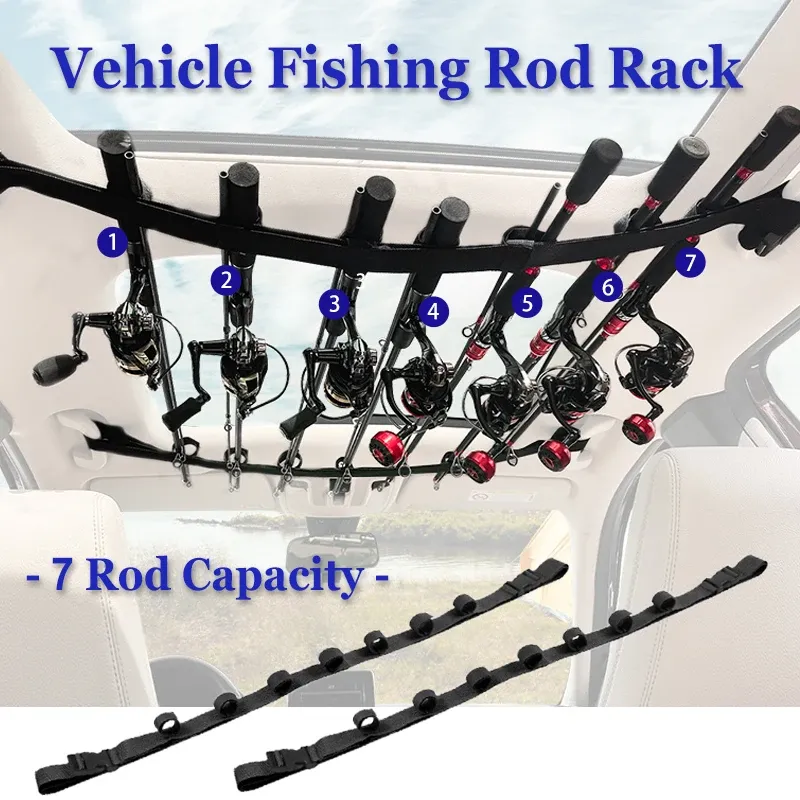
The cab is where rigged rods survive. Inside, a rod never sees rain, spray from the bed, or a hot tailgate, and it is behind a locked door when you stop for food. The ceiling position is what makes the cab work as rod space: run the strap along the grab handles and the rods ride overhead, tips toward the rear glass, with the whole bench still free for passengers or dry gear.
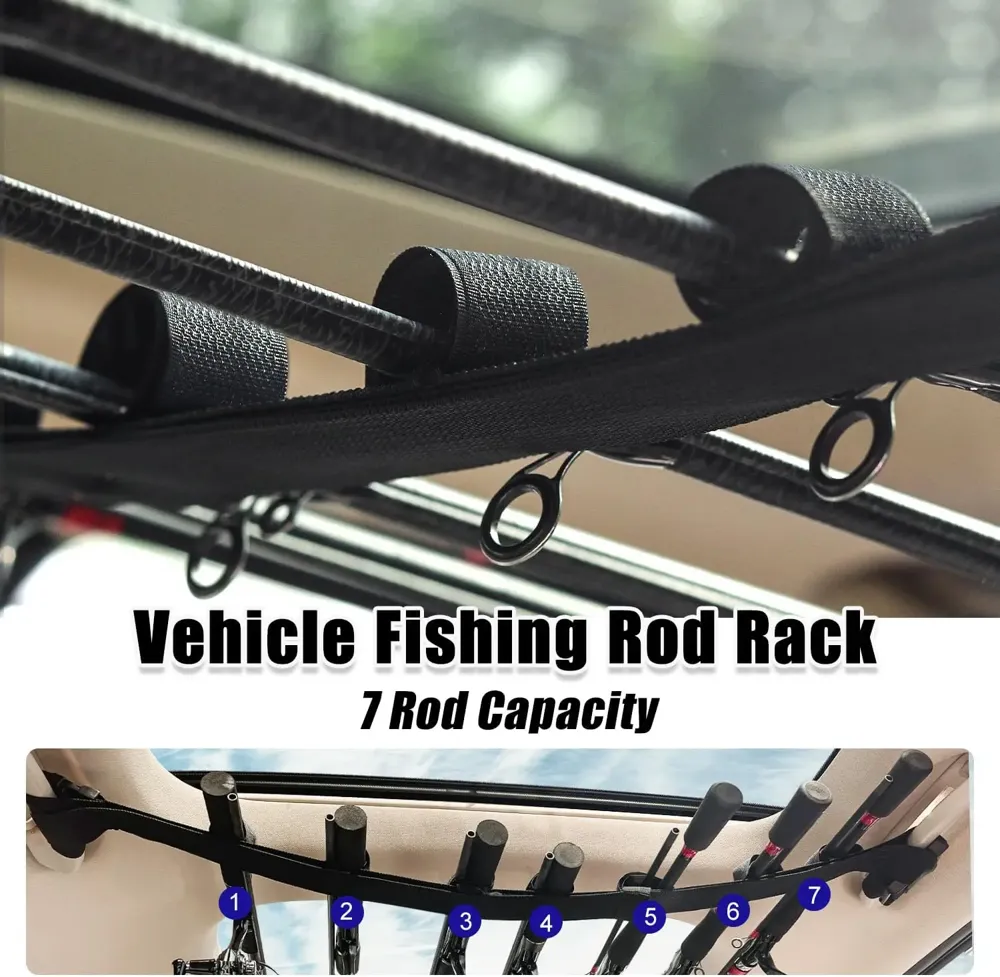
This is the setup our own car fishing rod holder was built for, and a truck cab is its easiest fit. The polyester strap adjusts from 33.5 to 66.9 in (85 to 170 cm), which spans a mid-size cab and reaches across a full-size crew cab, and it comes in a 5-rod and a 7-rod version. At about 6.7 oz (190 g) it folds into the center console when the cab is hauling people instead of rods. No drilling, no rails, nothing left behind on the headliner.
The one hard limit is rod length: a one-piece surf rod outruns any cab. Two-piece rods ride whole across most crew cabs, and anything longer breaks down or goes to the bed.
Tailgate and hitch setups
Bank anglers who park close to the water use the tailgate as a workbench: bait boxes on the gate, rods standing beside it while lines get tied. A holder at the back of the truck keeps rods off the ground and out from underfoot while you do it, and that alone saves more tips than any transport gadget, because the classic break is a rod flat in the grass behind a boot heel.
What tailgate hardware does not do is travel. A rod standing at the back of a moving truck is a flag in the wind, so treat these as camp furniture: they start working when the engine stops.
Rigged or broken down: the deciding question
Trip length usually answers it. A dawn run to a local bank favors rigged rods and a fast holder, since the whole point is casting five minutes after parking. A long haul on rough roads favors broken-down rods low in the bed, where vibration has nothing to whip and the sun has nothing to cook. The mixed case is common too: two rigged rods in the cab strap for the first hour, the rest of the quiver in tubes below.
When you park: from truck to water
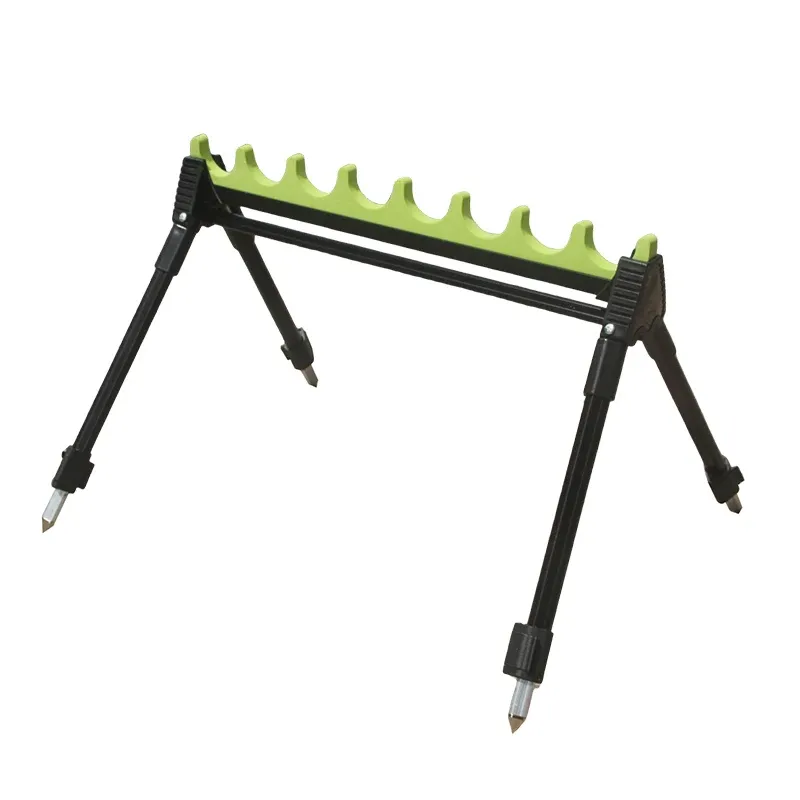
This is the hand-off truck anglers under-plan. Eight rods arrive safe and then lean against the truck paintwork, slide down the tailgate, and land in the dirt. A portable fishing rod holder is the camp-side answer: it folds flat for the drive, stands on its own telescopic legs with ground-spike tips, and its eight U-shaped slots hold the whole quiver upright by the truck while you rig, eat, or swap baits.
The rods that go fishing move one step further, to the water. There an automatic fishing rod holder stakes into the bank, holds the rod at working angle, and sets the hook itself when something takes the bait. Truck at your back, stand at the camp, spike at the water: three stations, and a rod is never lying on the ground at any of them.
A truck is transport, not storage
It is tempting to treat a crew cab as a rolling rod room, and plenty of anglers do until the day a favorite rod comes out with a set in the line and a sticky reel. A parked truck in summer sun runs far hotter inside than the air outside, and a bed under a cover stays damp long after the rain stops. Neither kills a rod in a weekend; both do it in a season.
The between-trips answer is a wall or ceiling fishing rod rack in the garage, two rails holding up to 10 rods flat and apart, right next to where the truck sleeps. Our fishing rod storage ideas guide covers that whole indoor side, so this article stays on the road.
Truck fishing by the numbers
Americans who go fishing in a typical year, nearly all of whom drive to their spot
— Recreational Boating & Fishing Foundation, Special Report on Fishing, 2023
economic activity from recreational fishing in the U.S., including the rods riding in truck beds and cabs
— American Sportfishing Association, Sportfishing in America, 2022
Every one of those trips starts and ends with a drive, which is why the carry setup gets used more often than any single lure in the box. Gear that only comes out on the water gets babied; gear that rides in the truck gets used every time the truck moves.
Our picks for a pickup
For rigged rods in a crew cab, the 5- or 7-rod strap loops over the grab handles in seconds. For camp and bank, the portable folding stand rides flat in the bed and stands the whole quiver at your spot. Both ship free in the US and arrive in 6 to 10 business days. See how we test for the method behind every recommendation on this site.
Truck rod holder questions
Can I use a car rod holder in a truck?
Yes. A strap-style holder loops over the same fixed points a truck cab already has: the headrest posts on the rear bench of a crew cab, or the grab handles along the ceiling. The RodPerch strap adjusts from 33.5 to 66.9 in (85 to 170 cm), which spans a mid-size cab up to a full-size crew cab, and it needs no drilling.
How do you carry fishing rods in a truck bed?
Secured, or not at all. A bare bed lets rods slide into tie-downs and tackle on every stop. Bed-mounted racks hold rods upright or across the bed, rod tubes protect broken-down rods lying flat, and a folded rod stand rides flat until you set it up at the water. Whatever you choose, the rod should not be able to touch metal.
Should rods travel rigged or broken down in a truck?
Rigged rods keep you ready to cast the moment you park, and they belong inside the cab or standing in a bed rack where nothing presses on the guides. Broken-down rods pack shorter and shrug off rough roads, which suits long hauls and washboard tracks. Most truck anglers end up doing both, by trip.